Company Logo
SIGN UP LOGIN

Posts with tag 'West Central Missouri'

Ep. 005: US Fish and Wildlife Partner Program


Putting Public Dollars to Work on Private Dirt: How the Partners for Fish and Wildlife Program Builds Better Habitat

Ninety-three percent of the state of Missouri sits behind property lines and locked farm gates. That's a staggering piece of geography when you step back and think about it—and it came up front and center in a recent conversation on TrophyCast with Neil Bowman. Neil is a private lands biologist with the U.S. Fish and Wildlife Service, which means he spends his days boots-on-the-ground on working farms and timber tracts rather than managing public wildlife refuges. If you own ground, or you're looking to buy a piece of real estate with an eye toward wild critters, Neil runs a program designed to share the cost of bringing native habitat back to life.


Neil grew up hunting and fishing the river bottoms of Lincoln County with his old man—a self-described river rat who built a career out of understanding landscape ecology. After earning a degree in environmental science from Southeast Missouri State and a master's in natural resources, he cut his teeth at five national wildlife refuges across the Midwest, including Clarence Cannon, Mingo, Big Oaks in Indiana, and Neal Smith in Iowa. For the last three years, he's been back on home turf in Missouri administering the Partners for Fish and Wildlife Program. He joined host Jake Brown, Jason Wallingford, and Jason—a Trophy co-founder and Great Rivers Habitat Alliance board member who has put these exact programs to work on his own acreage—for an in-depth look at how private landowners can steward their land while putting federal dollars to work.

What the Partners Program Actually Does

At its core, the program delivers voluntary technical advice and financial assistance to folks who want to improve native ecology on their land. Neil's territory spans everything north of the Missouri River plus the Mississippi River corridor all the way down to the Bootheel, with a heavy concentration of active projects across northeast Missouri.


Here is how a project moves from initial idea to dirt work:


  • Initial conversation. Neil visits with the owner to outline clear management objectives and identify where private land goals align with regional wildlife conservation priorities.

  • Historical imagery and soil mapping. He pulls historical aerial photos—often stretching back to the 1940s and 1950s—to see original prairie, savanna, or bottomland footprints before brush and timber took over.

  • Site evaluation and plan development. A customized habitat blueprint is drafted with total landowner input before a single signature goes on paper.

  • 10-year agreement. The owner commits to maintaining the restored habitat for a 10-year term.

  • Project reimbursement. Once the work is verified in the field, cost-share funds are reimbursed directly to the owner.


Crucially, this is not a permanent easement or a government takeover. You retain full property rights to hunt, fish, farm, and manage your ground as you see fit. There's no strict minimum acreage, making it accessible to small-acreage homesteaders and large agricultural producers alike, though larger contiguous tracts often receive priority when funding is tight.

Stacking State and Federal Help

Another valuable tool in the shed is combining multiple assistance channels. The Missouri Department of Conservation's Landowner Assistance Program provides around $10,000 per landowner for habitat projects, and state dollars can often be layered alongside federal programs to maximize your budget (though two separate federal programs cannot be applied to the same specific practice). Non-profit strike teams—including Pheasants Forever, Quail Forever, and the National Wild Turkey Federation—frequently provide on-the-ground muscle, burn plans, and specialized equipment. In northeast Missouri, a joint wild turkey initiative recently completed 1,000 acres of prescribed fire and 500 acres of timber stand improvement across private parcels.


When it comes to waterfowl and wetland management, the Missouri Agricultural Wetlands Initiative combines capital from USFWS, MDC, Ducks Unlimited, and NRCS. It covers up to 75 percent of restoration costs, generally capped near $30,000—a perfect fit for micro-wetlands, oxbow restorations, and moist-soil units rather than massive commercial earth-moving jobs. Because legislative budgets fluctuate annually, landowners should always double-check current caps with their local biologist.


For land actively under a Conservation Reserve Program (CRP) contract, direct financial assistance for new projects is restricted until the contract expires, but biologists like Neil can still provide technical planning so you're ready to hit the ground running on day one post-expiration. Landowners should also weigh the long-term land value implications of perpetual encumbrances like WRP easements if property resale is part of their five-to-ten-year plan.

Fighting Invasives Comes First

If there's one piece of advice Neil emphasizes above all else, it's this: knock back invasive species before taking a chainsaw or drip torch to your woods. Invasive plants like bush honeysuckle, autumn olive, and sericea lespedeza wait patiently in the understory. If you open up the timber canopy first without eradicating invasives, sunlight will cause bad plants to explode overnight. Jason shared that he spent eight solid years battling honeysuckle with backpack sprayers before executing his first timber stand improvement (TSI) cuts. Looking at 1940s aerial photos revealed that his hardwood timber was open pasture decades ago, explaining why invasive pioneer species took root so quickly after livestock were removed.


Eradication is rarely a one-and-done event; active land stewardship requires ongoing maintenance, selective spot-spraying, and long-term vigilance to keep invasives at bay.

Prairie, Moist Soil and the Confluence

From a purely biological return-on-investment standpoint, native prairie restorations and pollinator plantings offer incredible leverage. Insects form the foundational food supply for wild turkey poults, upland birds, and small mammals. Rather than planting solid, impenetrable stands of heavy native grasses, modern habitat design favors rich forb mixes with native grass strips placed strategically where thermal and screen cover is actually needed.

Down in the bottomlands—especially around the confluence of the Missouri, Mississippi, and Illinois rivers—landowners are shifting away from traditional flooded standing corn in favor of natural moist-soil management. By retaining seasonal water and encouraging high-protein native smartweeds, sedges, and millets, managers provide critical energetic resources for migrating waterfowl while lowering annual seed and diesel inputs. Groups like the Great Rivers Habitat Alliance host intensive three-day wetland management short courses each summer to teach private landowners how to manipulate water levels, manage seed banks, and hold wild birds consistently.

The bigger shift is on the river. Landowners at the confluence of the Mississippi, Missouri and Illinois rivers used to flood corn, shoot ducks, then drain the water and combine the rest. More of them are now converting those impoundments to moist soil, leaving water on and growing native food that migrating birds need. Great Rivers Habitat Alliance runs a three-day wetlands management class, capped around 20 people, usually in July at about $1,000. Dates for next year aren't set, and it has drawn attendees from Canada and California.

Why a Tax-Paying Landowner Should Care

When asked why the average citizen or urban sportsman should care about federal funds spent on private acreage, the answer comes back to scale: with 93 percent of the state in private hands, wildlife populations simply cannot survive on public reserves alone. Furthermore, sound land stewardship directly protects regional watersheds. Tile drainage systems and agricultural levees push nutrient-laden runoff downstream into major river systems, contributing to Gulf hypoxia. Restoring bottomland wetlands, field borders, and riparian buffer strips slows water down, holding topsoil in place and filtering agricultural runoff naturally.


At the end of the day, the real reward of conservation is seeing wild animals respond to your hard work. Neil recalled a local landowner who bought a low-lying, flood-prone crop field with zero wetland experience. After designing and completing a cost-shared moist-soil restoration, the owner sent Neil photos of himself and his son decoying mallards over water they restored together on their own ground.


If you're ready to start building a habitat plan for your farm, visit fws.gov to locate the U.S. Fish and Wildlife Service Partners for Fish and Wildlife contact for your county.


Go check out TrophyCast! The link is below!
Ep. 005: US Fish and Wildlife Partner Program

Ep. 004: How to Finance Live


There's a particular kind of regret that shows up about four months after closing on a piece of ground, and it has nothing to do with the land itself. It's the regret of realizing you structured the loan wrong, or missed a program that would've saved you two points of interest, or learned the hard way that "pre-qualified" and "pre-approved" aren't the same thing. I've watched friends make this mistake. I've almost made it myself. So when TrophyCast sat down with Daniel Steininger from Bank of Springfield to talk through the actual mechanics of financing recreational and farm ground, I paid closer attention than I expected to.

Steininger is a Mizzou grad who's spent his entire career at the bank, spending his days underwriting the exact loans that put people onto the land they've dreamed about since sitting in a tree stand their uncle built. He's not a hype guy. He's the guy who tells you what the numbers actually are, which turns out to be far more useful than almost anything else in this business.

Here's the first thing, and it's the piece that will save you the most grief: talk to a banker before signing a contract, not after. I know—the agent has things moving, deadlines are looming, and someone else might swoop in. But knowing your true numbers before becoming emotionally attached to a property is the difference between negotiating from strength and negotiating from desperation. Also, brace yourself, because recreational ground isn't financed like a home. You're looking at 20 to 25 percent down, not the 5 or 10 percent first-time buyers expect from residential deals. Raw land doesn't carry the same collateral cushion a house does—a bank won't lend 95 cents on the dollar for a piece of dirt with no structure, and honestly, they shouldn't. That's just reality.

Once you're actually securing the loan, there are basically two avenues. Bank of Springfield keeps plenty of recreational paper in-house—think a five-year balloon sitting on a 20-year amortization schedule. That works great if you're not chasing a set fixed rate for three decades. But if you want long-haul certainty, you're looking at Farmer Mac, which is essentially the ag-and-rec-land counterpart to Fannie Mae and Freddie Mac. At the time of recording, a 30-year fixed through Farmer Mac was running around 7 percent with 40 percent equity or better, while a 5-year fixed-variable option sat closer to 6.25. The bank doesn't hold that paper long-term—they service it, meaning you still call the same contact for the life of the loan even though the capital originated elsewhere. That detail matters more than it sounds, because the alternative is getting passed around between strangers every time your loan changes hands.

If you're on a tight timeline, keep in mind that Farmer Mac closings typically require about 40 days, primarily due to the appraisal. You're looking at an 80-to-100-page formal report rather than the brief five or six pages from an in-house appraisal. On top of that, boundary surveys in many rural counties are currently backed up five to six weeks. Put those together, and a 30-day close—the kind sellers love—gets tight quickly. Not impossible, just tight.

If you're new to the game, there's a program worth knowing about that a surprising number of eligible buyers miss entirely: the FSA's Beginning Farmer loan. Don't let the name fool you—"beginning" doesn't mean you're 23 years old in your first pair of Carhartts. It applies to anyone in their first ten years of filing a Schedule F, meaning you could be 61 and just getting into farming after retiring from another career entirely. The program allows entry with as little as 5 percent down, with the FSA financing roughly $500,000 to $600,000 directly and a local bank covering the rest behind them. If you qualify and nobody mentioned it, that's real money left on the table.

There's also a smart workaround for a situation many recreational buyers face without realizing it: handling a property with an existing house. Farmer Mac now allows a dwelling valued up to roughly $750,000 without disqualifying the deal, provided the land itself retains most of the collateral value. Say you're eyeing 100 acres with a nice farmhouse—often the best play is splitting the house off onto a smaller parcel (up to 20 acres, depending on county rural classifications) and financing it separately through conventional residential options like Fannie Mae, while the remaining acreage rides a long-term fixed land loan. It costs an extra survey, but it can save significant money over the life of the note.

As for the current market state—which I trust more than general market chatter since it comes straight from an underwriter calculating what buyers can actually afford—things around St. Charles County and surrounding areas remain steady. Strong, even. Loan volume has pulled back from the 2020-2021 peak, but that's not a red flag; it's simply the market taking a breather after being, as Steininger put it, "stupid" for a while. Buyers are thinking carefully before committing, which is the healthy response as conditions normalize. Ground an hour or two outside the metro remains the sweet spot—far enough to truly escape, close enough to be back at your desk Monday morning.

Don't count on those 3 percent 30-year rates returning. That ship has sailed and won't be circling back anytime soon. Short-term movements are unpredictable—dependent on the Fed and employment reports—but long-term, plan around current market rates rather than what a neighbor locked in four years ago.

The toughest part of the conversation, and one more landowners need to hear, touched on farm bankruptcies—which are climbing, particularly in Illinois. Steininger made clear that bankruptcy rarely stems from a single bad year. It's a series of difficult years piling up, compounded by relentless input costs and debt structures that get rolled forward instead of addressed. The classic trap occurs when an operating note isn't fully paid down and grows year after year; as rates rise, a note that began at 3 percent can wind up refinanced at 8.5—on land that previously carried much lower overhead. It's a hard conversation for a banker to have with a client of twenty years, but avoiding it only makes the eventual outcome worse.

Finally, an issue that comes up whenever auctions are mentioned to first-time buyers: the buyer's premium. People hear the term and assume they're taking on an extra burden compared to traditional sales with seller-paid commissions. They aren't. The math works out the same in the end—whatever final contract figure you reach gets financed, premium included. The real advantage of the buyer's premium is transparency: the number you watch rise on the screen during the auction is the exact amount that goes to the seller. No mental math needed when the gavel drops.

None of this is overly complicated once it's explained clearly. It's simply the kind of insight usually gained the hard way—after the fact, over a drink, wishing you'd known earlier. Might as well learn it now instead

Ep. 003: What Four Conversations at Squadfest Taught Us About Waterfowl Land


TrophyCast took the show on the road this time, broadcasting live from Squadfest at Dive Bomb Industries in Hazelwood. Over the course of the day, the crew, with added host and Trophy Agent Anthony Pozzi, sat down with four guests — a decoy company founder, a habitat nonprofit director, a hunting-tech entrepreneur, and a Ducks Unlimited regional director — and each conversation circled back to the same idea: this stretch of ground along the Mississippi Flyway is genuinely rare, and the people working to protect and understand it have a lot to offer anyone buying, selling, or developing property here.

First up was Cody Stokes, founder of Dive Bomb, who traced the company's start back to 2009 — photographing geese in a park and selling silhouette decoys on Craigslist before the business became official in 2011. Squadfest itself began as a pandemic-era response to canceled outdoor events and has grown from roughly 10 vendors that first year to 85 today. Cody also walked through the property that shaped his approach to development: 200 acres of what's known locally as Portage clay, soil so heavy and water-retentive that row-crop farmers had passed on it for decades. That same trait makes it ideal for waterfowl. His advice for anyone considering a similar project is straightforward — check the soil maps before moving any dirt, and physically probe the ground yourself, since sandy pockets can sit just beneath a thin layer of clay and prevent water from holding at all. He also made a point worth remembering: land that floods naturally today likely held water long before modern drainage systems existed, and ducks recognize that history through generations of migration, even when the ground looks unremarkable to a passerby.

Next was Hannah Hopson of Great Rivers Habitat Alliance, who's spent her career defending the floodplain where the Mississippi, Missouri, and Illinois Rivers converge. GRA was founded in 2000, originally in response to a highway project cutting through wetlands, and its core argument hasn't changed since — floodplain ground is meant to flood, and letting it do so protects everyone downstream better than additional development or levees ever could. Recent work has included pushing back on data center proposals near sensitive well fields in St. Charles and encouraging utility companies to reroute transmission lines away from wetlands and farmland. Hannah also oversees the Hens Wildlife Center, a converted 785-acre former duck club that now hosts youth, veteran, and first-responder hunts alongside a well-regarded wetlands management course that draws participants from across the country to learn moist-soil management directly from experienced practitioners.

Josh Hogan followed, representing Blind Book, a platform built to solve a familiar problem for anyone selling recreational property: documenting how good the hunting actually is. Rather than a handful of photos from a strong day, Blind Book lets landowners log every hunt — blinds, harvest data, weather, and migration timing — over multiple years. What started as a way to get his own kids more engaged in the blind has become a tool clubs and outfitters use to manage their operations like a business, and one sellers can use to give buyers real documentation instead of secondhand stories.

Closing out the day was Todd Carlton, a senior regional director with Ducks Unlimited who's been with the organization since 1985 and recently marked 25 years on staff. The numbers he shared underscored the scale of the work: DU just completed a seven-year capital campaign that raised over $4 billion against a $3 billion goal, with roughly 86 cents of every dollar raised last year going directly back into habitat. That marks a third consecutive year touching over a million acres. Todd also noted DU's growing involvement with private landowners beyond hunting — CRP program support, erosion control, and clean water initiatives that benefit farmers regardless of whether they hunt waterfowl.

Four distinct conversations, one consistent conclusion: this ground is worth understanding well, whether the goal is building a duck hole, protecting a floodplain from development, documenting hunting performance, or funding habitat work across the flyway. The people doing that work daily were glad to share what they know — and based on the turnout at Squadfest, plenty of people showed up ready to listen.

A massive thank you to the outstanding companies that partnered with us for this episode: Divebomb Industries, Ducks Unlimited, Great Rivers Habitat Alliance, and BlindBook. Be sure to visit their sites and support the brands that support the show!

Divebomb Industries
divebombindustries.com

Ducks Unlimited
ducks.org

Great Rivers Habitat Alliance
grha.org

BlindBook
blindbook.com

The Link to the episode is below!
Ep. 003: Live from Squadfest

Ep. 002: Zach Nixon - Beck's Hybrids


Knee High by the 4th of July? Corn has changed…

TrophyCast's second episode brought in its first guest, and the crew didn't have to look far — Zach Nixon, District Sales Manager for Beck's Hybrids, covering nine counties in northeast Missouri. He's also cousins with co-host Jason Wallingford, a connection that came up more than once. Zach's a first-generation cattle farmer with a wife and three kids, six years into his career at Beck's, and he came prepared to talk shop — corn, cattle, dirt, deer, and everything in between.

First thing worth knowing: the old saying about corn being knee-high by the Fourth of July doesn't hold up anymore. Modern hybrids are tasseling by early July now. If a field isn't already well above head height by then, something either went wrong or went in late.

The bigger story this year isn't the corn's height, though — it's what farmers are up against to grow it. Diesel that guys locked in this spring around $2.50 a gallon is now pushing $4.50 by the time they fill up for harvest, nearly double, and it's a cost they have no control over. That's on top of corn sitting around $4 a bushel, which doesn't comfortably cover input costs. A wet spring compounded the problem, leaching nitrogen out of the soil and leaving a lot of fields yellow and stunted. The result is a season where many farmers are hesitant to spend on inputs even when the crop likely needs it.

Cattle, meanwhile, are having a strong run. Beef prices are about as high as anyone's seen, which tracks with the roughly 10-year cycle where cattle and crop prices tend to move in opposite directions — cheap grain makes feeding cattle more profitable, so expensive corn tends to squeeze the cattle side and vice versa.

One point worth sitting with: starting a farm operation from scratch today is close to impossible without outside income. Land, equipment, and rent are all priced beyond what a young farmer can typically support on ag income alone. Zach and his wife are first-generation cattle farmers themselves and still rely on off-farm jobs to make it work. The encouraging side of this is that more sons and daughters are coming back to take over family operations than in recent years. The challenge is that not every farm can support two or three returning children financially, which is pushing more families toward diversified income — hog barns, chicken barns, cover crops, carbon credit programs — just to make the numbers work.

Solar and wind leases came up as well, and the picture is mixed. The money is real — Zach mentioned landowners clearing six figures a year off wind towers — and it's hard to blame anyone for taking a deal that size. But there's legitimate concern about what happens to good Class A tillable ground once towers, buried lines, and access roads go in. That ground doesn't return to full production, regardless of what happens to the lease down the road.

One clarification worth making, since the two terms often get used interchangeably: hybrid corn and GMO corn are not the same thing. Hybridization — crossing two inbred parent lines to produce a stronger plant — dates back nearly a century, the same basic principle as crossing an Angus with a Hereford. GMO traits are bred in separately, on top of that hybrid base — herbicide tolerance, pest resistance, and similar characteristics. A hybrid can be entirely non-GMO. It's the added trait, not the hybridization itself, that makes something a GMO.

On the practical side, drone spraying is gaining ground quickly, particularly for fungicide application, and it's proving especially useful on oddly shaped or hard-to-fly fields. The streaky, uneven crops sometimes shown online as evidence against drones are typically the result of an operator covering too much ground too fast, not a shortcoming of the technology itself. In equipment, the used market is where the activity is — new machinery sales are slow across the board, while older, simpler tractors that farmers can repair themselves without a shop visit are holding, and in some cases increasing, in value. Virtual fencing for cattle is also on the horizon: GPS collar systems, similar in concept to an invisible dog fence, scaled up for herds in the thousands, replacing physical paddock fencing with boundaries set on a phone.

But the most useful takeaway from this conversation wasn't about commodities or technology at all — it was about being a good neighbor. As more land changed  hands to outside investors and recreational buyers, the advice was simple and consistent: get to know the people around you, respect the history already tied to the land you're buying, and remember that wildlife doesn't recognize property lines. A landowner who shows up and introduces themselves tends to get much further than one who doesn't.

Ep. 002: Zach Nixon - Beck's Hybrids

Ep. 001: We're Back!


TrophyCast Is Back — Here's What's Really Happening in the Land Market

TrophyCast just came back from a long break, and it's back with more voices at the table. Mike Meagher, Jason Wallingford, and Jake Brown sat down to catch up on everything that's changed in Midwest real estate over the last few years. No script, no fluff — just three guys who work in this market every day talking through what they're actually seeing.

Residential: It Depends Where You're Standing

Ask three agents how the housing market's doing and you might get three different answers, and that's basically what happened here. The read: there's no clean trend line up or down right now. It's sporadic, and it comes down to location and price point.

Entry-level and move-up housing under $500,000 in tight submarkets — St. Louis County, St. Charles County, Warren and Lincoln Counties — is still moving fast, with multiple showings and multiple offers when good inventory hits. The $500,000–$1 million range has been slower. But interestingly, the $1.5 million-plus segment picked up steam early this year, with listings that sat untouched all of last year finally going under contract in the first quarter.

The bigger shift is buyer behavior. Contingencies are back. Inspections are killing more deals than they used to. Buyers aren't panic-buying the way they were a few years ago — they're pickier, and they expect a house to actually be move-in ready.

One point worth remembering if you're pricing a listing: overshooting the number doesn't just cost you time, it can cost you the whole sale. List too high, and by the time you reduce, buyers assume something's wrong with the house. The list price is a marketing price — not a wish.

A New Development Worth Knowing About

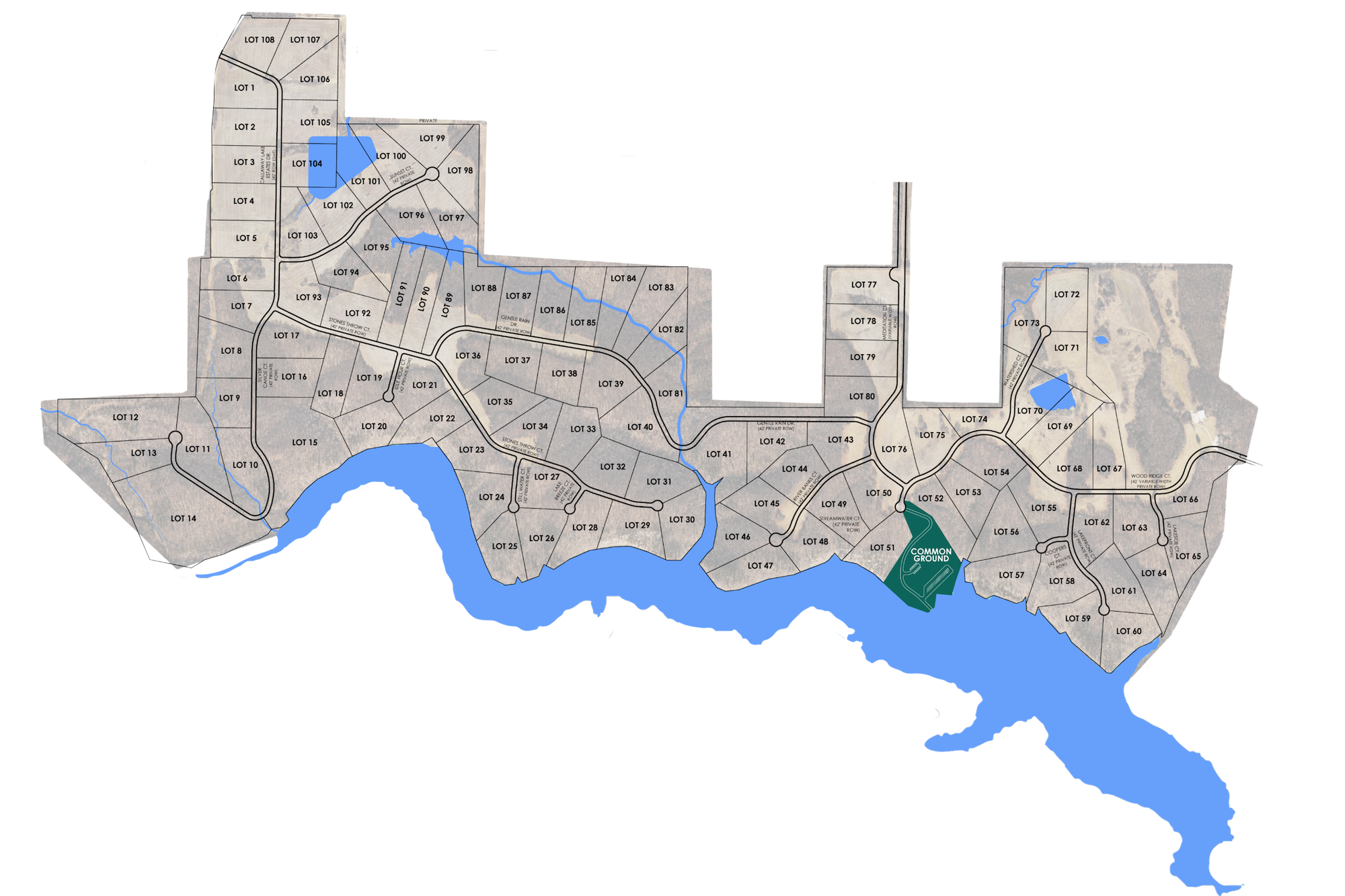
Callaway Lake Estates, a development offering 5 acre lots just outside Defiance/New Melle with lake access to a 170-acre private lake, came up as one to watch. It's the kind of property that feels remote — wooded, quiet, private marina, boat slips — but sits about 25–30 minutes from Chesterfield Valley. Waterfront and water-view lots have been moving, though plenty of buildable acreage remains.

The bigger question hanging over that whole corridor: data centers. Several are planned west of the metro, and nobody's fully sure yet what that means for property values or quality of life nearby. The honest answer from the team: reserve judgment until the first one actually goes in and everyone can see the real impact instead of guessing at it.

Farmland: Quality Still Wins, and the Auction Process Proves It

On the tillable side, Class A farmland is still bringing serious money. A recent auction in Clark County, Missouri, saw a highly productive tillable tract sell for $15,251 an acre after two neighbors got into a bidding war — a number that never would have shown up on a traditional listing at $15,000 flat.

Lower-quality ground with waterways, draws, and mixed cover is a different story. It's pulling back in price, mostly because it satisfies neither the farmer looking for tillable acres nor the hunter looking for prime habitat.

Pasture ground with tight fences and reliable water is holding strong too, driven by cattle prices that are about as high as anyone's seen. And buyer interest isn't just local anymore — more people are pulling money out of the stock market and parking it in income-producing land, treating it as the more consistent, tangible alternative to a market that everyone quietly suspects can't keep climbing forever. For what it's worth, the numbers back that instinct: farmland and the S&P 500 have delivered comparable long-term average returns, but land does it with a lot less volatility — and you can hunt it.

Auction vs. Listing: The Honest Version

Not every property fits an auction — especially when a seller's locked into one number. The properties that struggle at auction are usually the ones where the seller has already decided what it's worth, regardless of what the market says. The fix is setting realistic expectations up front, so that any surprise is a good one.

Here's the part sellers don't always think about: a strong offer with a fast, clean, cash close in 30 days is often worth more than chasing a slightly higher number through months of showings, negotiations, and contingencies. There's value in money, value in time, and value in convenience — and a lot of sellers underweight the second two.

The team was also candid about listings that go the traditional route and stall — start high, sit for months, then get chased down in price until it lands near where the auction reserve probably should've been in the first place. The difference: an auction compresses that whole process into a 30–45 day window and forces real competition, instead of letting the market slowly figure out the right number on its own.

What's Coming Up

TrophyCast is aiming to release new episodes every other week, with guests on estate planning, tax strategy, land management, and wildlife biology on deck. There's also a stack of live auctions running right now across Franklin, Ralls, Cedar, Howard, and Miller Counties, along with the quarterly Bundle Event — a flat $895 option built for smaller properties that don't need the full auction treatment.

Bottom line from this episode: the market hasn't fully picked a direction yet. It's not booming, it's not crashing — it's figuring itself out. But quality ground, priced honestly and marketed the right way, is still finding buyers fast.

Ep. 001: We're Back!

Archives

Available Languages

Login to My Homefinder